

March is a month to celebrate women, and as women founders, it’s becoming a bit of a tradition for us to spread a little love for creatives whom we admire. When we research makers and designers, we’ve noticed that women are not often enough championed for their work. Maybe they are too modest and prefer to stay out of the limelight. We don’t think they should be!
In 2024, we introduced some major women designers to a Mother’s Day in Japan journal. Last year, we added a few more who we think deserve to be seen. This year, we’re combining those lists and celebrating more women creators whose passion for material, craft and graphic design are exceptional.
WOMEN DESIGNERS TO LOVE 2026: Design Matters

Left: Onomatopée's Pokopoko necklace and Baroque Pearl Hook Earring. Right: A selection of Dekopoko stud earrings. ©Onomatopée
Onomatopée
Being a women duo of designers is something that Hisano and Satomi of Onomatopée say feels very natural for their craft. “There’s a beautiful synergy in how we support one another, constantly bouncing ideas back and forth, pushing each other to think bigger.”
We first met Onomatopée at a Yokimono event in London and were immediately struck by their ability to create statement pieces with such delicacy. Their blend of minimalism with organic forms is always quietly striking, even at the tiniest scale.
Though from very different backgrounds — Satomi has roots in traditional silversmithing, and Hisano studied architecture and interior design — these two designers have always had the same vision when it comes to jewellery. Both studied in Japan and both honed their skills in the UK, where they met while working at Sweet Pea Fine Jewellery in London. Onomatopée, officially established in 2023, combines all their skills, knowledge and passion to design jewellery in forms they personally love. It’s a relatively young venture of fresh ideas backed by a background of years of experience.
For Hisano and Satomi, onomatopoeia represents the “magic of words.” Onomatopée is the duo's imaginative way of translating that concept into the “magic of jewellery.” Designs are subtly playful, made to evoke emotion, entertain and spark the imagination. The "poko poko" of rising bubbles become clusters of imperfectly perfect freshwater pearls, "puchi puchi" popping of effervescence appear as tiny silver and gold dots, and "sasasa" of falling rain turns into fine dotted dashes of shimmering metals.
We also love that for Onomatopée, jewellery should be as sustainable as possible, and they use as many recycled metals and materials as they can for every piece.
Visit our Onomatopée collection and Onomatopée to see more.

Yuri Himuro and her Colorwave textile, which was exhibited at "Soup Bowl," an exhibition in collaboration with Hiroto Yoshizoe at Tiers Gallery. Image courtesy of Himuro / Tiers Gallery via Prtimes.
Yuri Himuro
Yuri Himuro’s unique fabric designs have been making ripples in the textile industry for a decade. We first discovered her work back in 2016, when she established her studio and also exhibited her playful, interactive approach to textiles. Her work is all about surprise and joy, and back then, we were delighted by a fabric that involved snipping away threads to reveal hidden whimsical motifs. She has since shown her work at Salone del Mobile, been exhibited across Japan and internationally, won various awards and participated impressive collaborations, including with Loewe, Marimekko, Moleskin and Liberty.
Himuro’s signature Snip Snap series utilises her expertise of jacquard weaving, which allows her to leave layers of threads that can be cut away to reveal patterns or motifs to create unique designs. Her approach to textiles gives them an extra visual dimension that enhances our relationship with fabric. But her work isn’t pure aesthetics, it’s about material and texture, pushing their boundaries to consider the versatility of thread, yarn and weaving techniques.
In December last year, Tiers Gallery in Tokyo exhibited “Soup Bowl,” a collaboration with space designer Hiroto Yoshizoe that showcased Yuri’s new work Colorwave — a textured blanket with colours that seem to shift and change, depending on which angle it is viewed from. It’ a beautiful, lenticular-like work, inspired by the colours of shifting light and woven using a structure that Himuro created herself. From a distance, colours blend together, up close it undulates in a rainbow of colours. Though futuristic in design, she uses natural materials — wool and cotton yarns — to create a piece that brings an organic depth and movement to textiles.
Visit https://h-m-r.net/ to see Yuri’s latest works and her instagram to see her new thermochromic fabrics that reveal motifs when warmed.

Awatasuji Design members with their Play Stool for Interoffice's charity auction and their design for Maarket bag. Images courtesy of Awatsuji Design / Interoffice via Prtimes
Awatsuji Design
Awatsuji Design is rooted in graphic design, which naturally extends to objects, interiors and everyday life items. Led by sisters Misa and Maki Awatsuji, the daughters of renowned textile designer Hiroshi Awatsuji, the studio has grown into a quietly influential design practice of seven all-women members since its establishment in 1995.
From branding and packaging and spatial graphics, Awatsuji Design’s work is calm, functional and visually precise rather than over decorative. The team focuses on our relationship with objects and spaces using clean typography and sensitivity to proportion. We think their work is quintessentially contemporary Japanese: calm, functional and subtly playful with a hint of inherited textile design influence. Think bold but soft-shaped graphics, simplified visual cues and a delightful interpretation of Japanese motifs and silhouettes in bold, restrained colours. It’s joyful but never garish.
Among their most recent works is Play The Stool, one of 15 customised Artek Stool 60s commissioned for a charity auction to celebrate interior designer Interoffice’s 50th anniversary. The quirky work, which features a seat that doubles as a board for kokeshi-doll like game pieces, stands with an impressive line up of other heavy-hitting designers of the stools. These include architect Tadao Ando, product designer Naoto Fukusawa and graphic designer Akiko Kawamura.
Awatsuji Design has worked with many brands we also admire, including Terada Mokei paper models, Lemnos homeware, Kotohaco towels and a host of Japanese sweets makers. Sometimes designing products, other times branding and packaging but always bringing their own perspective with utmost sensitivity to their clients’ aesthetics.
Visit https://www.awatsujidesign.com/ to view all their product, package and logo designs.

Chiori Ito's Paper Wreath. Image courtesy of Chiori Ito via Prtimes
Chiori Ito
A self-professed admirer of crafts and Scandinavian design, Chiori Ito is an independent product designer and Chair of the Hokkaido Design Council. She established her design office in 1999, focusing on furniture and everyday objects, primarily working with woodworkers in Hokkaido, her home prefecture. Through her practice, she works across scales — from small daily goods to public spaces — always focusing on linking product, activity and space. Her designs centre on fostering human connection, sparking new experiences and inviting conversation. As chairperson of the Hokkaido Design Council and a part-time lecturer at Hokkai-Gakuen and Tokai universities, she also guides the next generation in these principles.
Having studied in Denmark, Chiori’s furniture pieces are a fusion of Japanese and Scandinavian sensibilities — timeless works of clean lines softened by curved edges that all showcase the natural beauty and warm, tactile nature of wood. There’s also a delicateness and precision to her work that we particularly admire in her synthetic paper products, which she exhibited at the Tokyo International Gift Show last month as part of the Hokkaido Sapporo booth.
Chiori’s Paper Wreaths reveal how complex detail can be achieved through simple, clever design. Each one starts as a flat, ring of paper that is laser cut with barely visible patterns. Once gently folded along the ring’s centre line, however, it turns into a striking 3-dimensional wreath — a garland of exquisite, unfurling motifs. Her ability to turn ideas into these forms seem limitless, from floral bouquets to flickering flames to architectural shapes. Her choice of synthetic paper is also purposeful. Designed to be a long-lasting and reusable artwork, the synthetic paper is as lightweight and flexible as ordinary paper, but far more durable and water repellent. It also has a similar texture that can be drawn on and painted, making her wreaths customisable.
We know it seems like a small thing to get excited about, but so often it’s the small things, the details that say so much about principles of design.
See https://www.chioriito.com to see Chiori Ito’s furniture and other works.

Clockwise from top left: House Trivet by Sunaolab, Shape in Shape by Kei Tominaga, Pebble Incense Stand by Maki Baxter; Mini Gardening Set by Asano Mokkousho, Neji Lampshade by Saiko Design, Oxalis Card by Takako Copeland. ©NiMi Projects
Women Creators at NiMi Projects
Many of the pieces we offer at NiMi Projects are designed by women or involve women at the helm of their creative studios. We curate by good design, but we confess, if there's a woman involved, we do gravitate towards it!
Here's our list of brands shaped by women creatives we know and admire.
Asano Mokkousho — Gardening goods
Atelier Yocto — Wood works
Awaido — Green Tea
Buoy — Recycled marine plastic goods
Kei Tominaga — Jewellery
Maki Baxter — Ceramics
Onomatopée — Jewellery
Postalco — Stationery
Saiko Design — Washi paper Lighting
Sukima — Wood mobiles
Sunaolab — Wood works
Takako Copeland — Illustrated cards
WOMEN DESIGNERS TO LOVE 2025: Function, Form & Beauty

Kei Tominaga & an On the Wall piece - Portrait by Tom Lewis Russell, image courtesy of Kei Tominaga
Kei Tominaga
We can’t introduce Japanese women designers without mentioning Kei Tominaga — one of our valued friends whose sculptural jewellery pieces are among our best sellers at NiMi Projects.
A sculptor, traditional metalsmith and jeweller, Kei is inspired by the flexibility of sheet metals, their ability to be folded, twisted, curved and bent into architectural forms. Her minimalist aesthetic retains a gentleness and subtle warmth achieved by fine textures, the use of soft metals, and her affinity for light.
Trained in metal sculpture and smithing at the Tokyo University for Art and Music, Kei began exploring product design after completing her masters. Her jewellery, like her artworks, retain the lightness of paper and natural textiles in designs informed by origami folds, knots and architectural shapes.
In the past, Kei’s work featured at Tokyo Design Week, Tokyo Designer’s Block and Saatchi & Saatchi Tokyo. Now based in the UK, she focuses on jewellery and sculptural pieces that have garnered the attention of top publications, including The Financial Times, Elle Decoration and Monocle.
Visit our Kei Tominaga collection to see her pieces.

Hiroko Takahashi & items from the Ikea Sötrönn collection - Image courtesy of Ikea Japan via PR Times
Hiroko Takahashi
Hiroko Takahashi is best known through the brand Hirocoledge — her reinvention of the kimono into stunning contemporary wear. Takahashi’s designs highlight the beauty of traditional kimono structure with striking geometric patterns — circles, lines and curves in bold colours, primarily black and white.
Her distinct use of graphics led to various collaborations, including an incredibly popular collection with Adidas that also revisited classic Japanese garment shapes for contemporary wear. Last year, she showcased her reimagining of the kimono at an installation at Designart Tokyo and notably collaborated with Ikea for Sötrönn, a vibrant collection of swirl-patterned homeware that you can still, and we think you should, get.
Visit Hiroko Takahashi's Hirocoledge site to see her kimono and other garments.

Hiroko Otake & work in collaboration with &T - Image courtesy of Designart Tokyo via PR Times
Hiroko Otake
The ephemeral beauty of nature is Hiroko Otake’s design domain. A contemporary nihonga (Japanese-style) artist and graduate of Tokyo University of Arts, Otake hones traditional Japanese techniques to evoke the fleeting nature of time in works of expressive colour and texture. Her pieces use mineral pigments, gold foil and paint to depict organic motifs in both ethereal and bold artworks.
Visually contemporary, yet still traditional in nature, we’ve seen her work in fashion, interior design and more. At Designart Tokyo 2024, she teamed up with embroidery art brand &T for an installation of works that further explored the creative industry’s use of materials. Upcycled textiles and fishing net threads, combined with sensors and lights, brought to life Otake’s colourful butterflies for a tactile exhibition that reminded visitors of the often transient nature of objects.
Hiroko Otake's beautiful works can be viewed on her website.

Saki Takeshita & chairs from her Eeyo series - Image courtesy of Designart Tokyo via PR Times
Saki Takeshita
By exploring the intersection of traditional Japanese artisanship with contemporary design, Saki Takeshita has an innovative approach to her work. A graduate of Musahino Art University’s Department of Industrial, Interior and Craft Design, Takeshita focuses on transforming traditional materials in unconventional and modern ways. Her furniture and objects are always artistically compelling yet still fully functional.
At Designart Tokyo 2024, she unveiled Eeyo, a series of balsa wood objects that included striking chairs dyed in vibrant ombres to create subtle geometric patterns. The dynamic visual effect was achieved by dyeing and applying heat to alter hues, a process that also enhances the wood’s natural grain texture.
Be sure to visit Saki Takeshita's website to see the details of her works up-close.
WOMEN DESIGNERS TO LOVE 2024: Famed & Rising Stars
There are plenty of women paving the way in innovative design in Japan, though not nearly enough properly recognised for their work. To celebrate International Women's Day, we introduce a few women that we particularly admire and focus on up-and-coming product designers we hope to see more of.
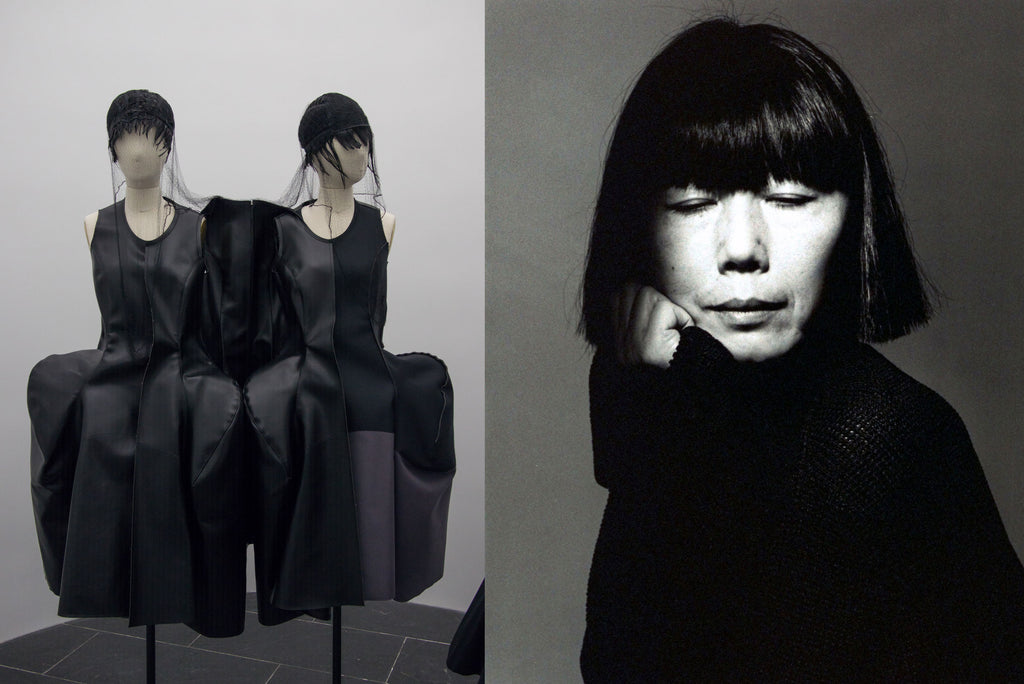 Left: Two Rei Kawakubo dresses on display at "The Rei Kawakubo - Comme des Garcons Art of the In-Between show at the Met" / Rhododendrites, CC BY-SA 4.0. Right: Rei Kawakubo / Public Domain
Fashion
In fashion, everyone knows the avant-garde garments of Rie Kawakubo’s Comme des Garcons, the colorful textiles of the late Hanae Mori, the whimsical designs of Tsumori Chisato and the club/streetwear of Michiko Koshino. Since those pioneers, we’ve seen the rise of Limi Feu’s minimalist blacks, Mame Kurogouchi’s feminine silhouettes, Hiroko Takahashi’s bold geometric textiles, not to mention the impressive work of Chitose Abe, the creative director of Sacai — one of Japan’s most popular brands of streetwear.
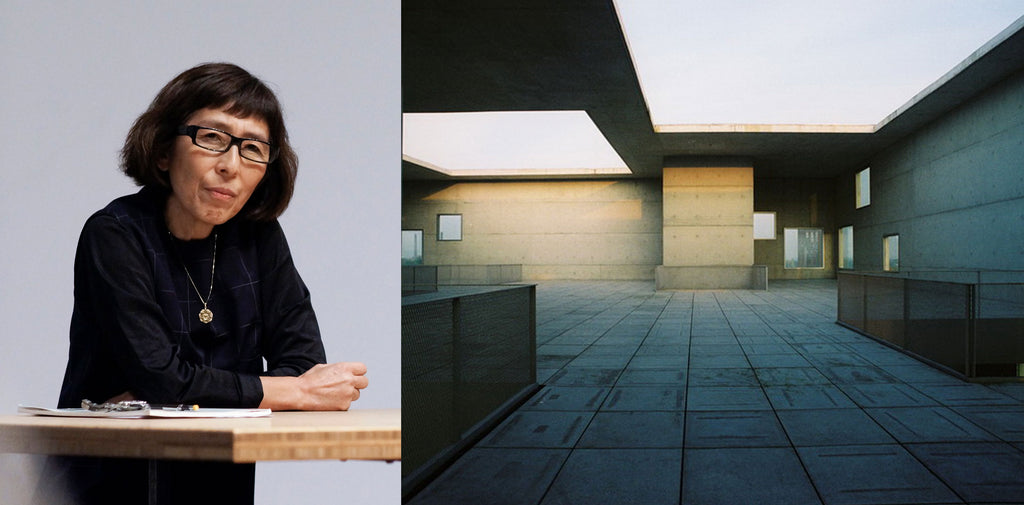 Left: Kazuyo Sejima at the 2014 Canopy: Gathering Space / Columbia GSAPP, CC BY 2.0. Right: Zollverein School of Management and Design, Essen, Germany, designed by SANAA (Kazuyo Sejima, Ryue Nishizawa) / Alena Hanzlová, CC BY-SA 3.0
Architecture
For architecture we have to applaud Itsuko Hasegawa and her unusual, striking public buildings, Kumiko Inui’s minimalist community-inspired works, and Kazuyo Sejima, whose modernist structures with Ryue Nishizawa won their architectural practice SANAA a Pritzker. Unfortunately, there are few solo women architects getting the limelight in Japan … or in the world, even. When SANAA won the Pritzker in 2010, Sejima was only the second woman to win the prestigious award.
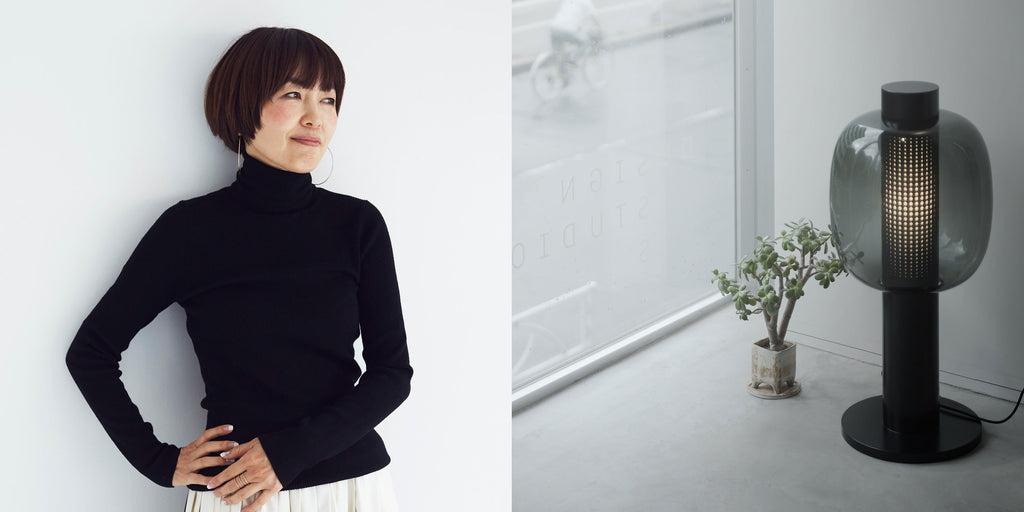
Left: Fumie Shibata. Right: The Bonbori glass lamp, designed by Shibata / Both images courtesy of Studios2022, CC BY-SA 4.0
Fumie Shibata
Similarly, product design seems dominated by men. But over the years, we’ve seen some incredible works by women.
Fumie Shibata is perhaps the best-known woman product designer in Japan. Creating stunning minimalist works for Muji, Kinto and other major brands, she has been winning Good Design awards, iF awards and more along her rightful way to fame. Inspired by Japanese culture and futuristic but gentle silhouettes, her work focuses on the importance of detail and form.
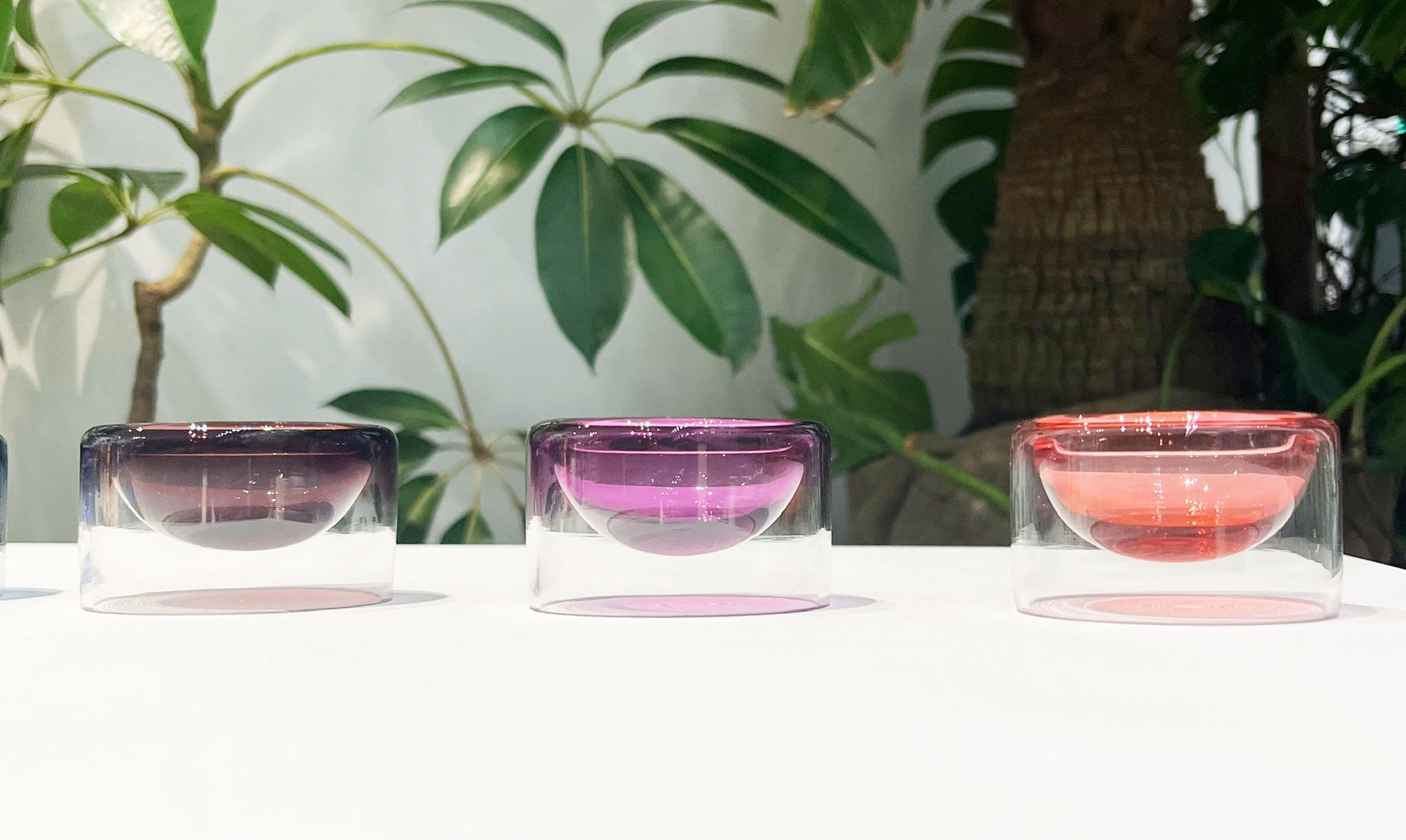
Glassware designed by Shizuka Tatsuno / Image by Mio Yamada
Shisuka Tatsuno
Shizuka Tatsuno’s re-imaginings of Japanese crafts have led to her works being published in just about every notable design magazine in Japan. She brings new life to all manner of traditional artisanship with beautiful contemporary forms.
Silk kimono textiles become stunning three-dimensional necklaces, urushi lacquer is applied to glassware and decorative Kutani-yaki pottery is used to make accessories. Kumiko woodwork is re-worked into mobiles, Takaoka metal into artworks, and traditional pottery and glassware re-designed into minimalist forms. Tatsuno has ascended from a Good Design award winner to a Good Design award judge and was Selected for the Lexus New Takumi Project in 2019.
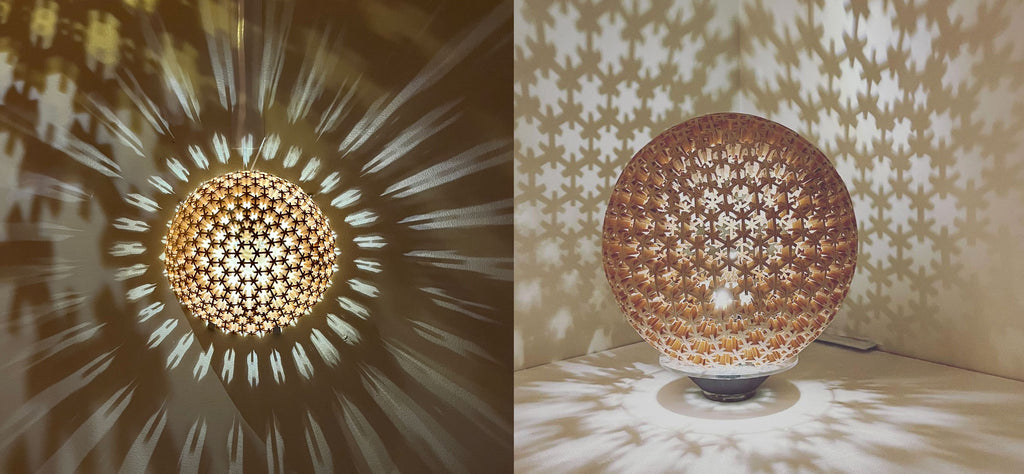 Spherical lampshades, designed by Mai Suzuki of Nami-iki / Images by Mio Yamada
Mai Suzuki
We first encountered Mai Suzuki of Nama-iki at Designart 2022, and we’ve been in love with her work ever since. Suzuki has virtually re-invented the craft of kumiko wood lattice paneling, traditionally used for sliding doors, into stunning three-dimensional pieces. Kumiko involves complex joinery without the use of any adhesive, nails or screws. Each small piece of wood is held into place by pressure alone.
Suzuki collaborates with kumiko craftspeople and applies the foundations of the craft to organic and spherical shapes to create dramatic lampshades, installations, and even an avant-garde dress. She’s been featured in Forbes Japan, TSK’s TV Takumi and The Japan Times, and we suspect we’ll see a lot more of her works in the future.

Left: Inflatable Leather, designed by Satomi Minoshima. Right: Cryptid, designed by Sae Honda / Images ©Satomi Minoshima, ©Sae Honda, via The Thinking Piece, Obscure Solutions.
Satomi Minoshima & Sae Honda
At the Milan Salone 2023, The Thinking Piece’s “Obscure Solutions” exhibition featured two Japanese women designers creating astonishing textile innovations.
Satomi Minoshima’s Inflatable Leather furniture is just as it sounds — voluptuous round leather chairs that can be deflated and packed away when not needed. She re-thinks inflatable works, usually only considered as beach items, into long-use interior pieces designed to become more unique as their leather ages.
Sae Honda addresses the environmental issues of faux fur by recycling waste fabrics. By felting together discarded scraps from factories, she creates Cryptid, a new textile of contrasting colour mixes and textures.